
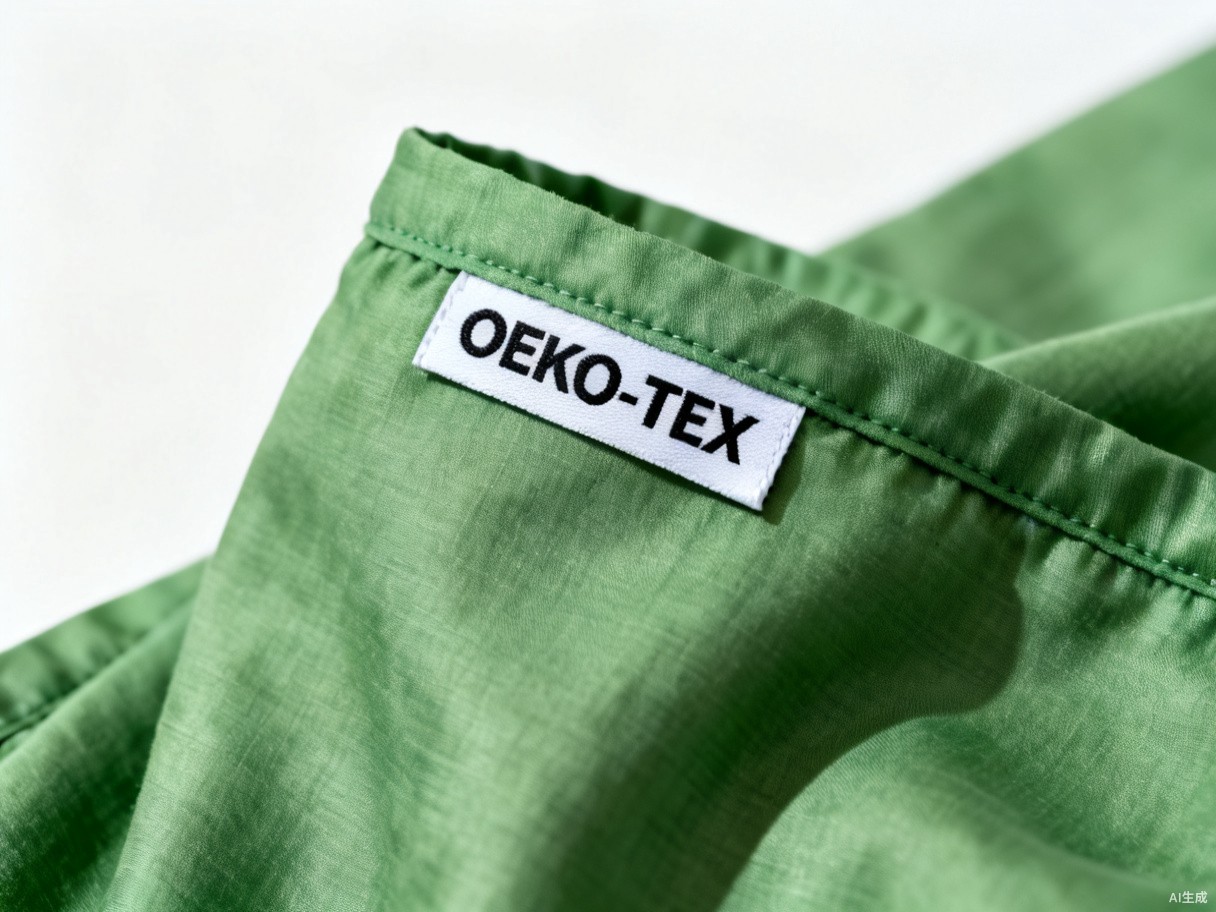
In home-textile and carpet export, OEKO-TEX Standard 100 has become an “admission ticket” for mainstream European and American retailers. Without it, products may be excluded from major supply chains; with it, you can enter premium channels and command a price premium in negotiations. This article walks home-textile exporters through the certification system, test items, and business value of OEKO-TEX.
1. What Is OEKO-TEX Standard 100?
OEKO-TEX Standard 100 was launched in 1992 by the Swiss textile testing body OEKO-TEX. It is one of the most authoritative independent ecolabels for textiles, with a single goal: verify, from the consumer’s perspective, that a textile contains no harmful levels of chemicals known to affect human health.
Certification is split into four product classes by end-use. The higher the class, the stricter the limits:
| Class | Product Type | Key Limit |
|---|---|---|
| Class I | Baby textiles (up to 3 years) | Strictest, formaldehyde ≤16 mg/kg |
| Class II | Direct skin contact (underwear, bedding) | Formaldehyde ≤75 mg/kg |
| Class III | Non-skin contact (outerwear, curtains) | Formaldehyde ≤300 mg/kg |
| Class IV | Decoration materials (carpets, wall coverings) | Formaldehyde ≤300 mg/kg |
Note: commercial carpet tiles typically apply for Class IV. If the buyer intends the product for child-use spaces, Class I is required.
2. Core Test Items
The OEKO-TEX test list is not a static checklist — it tracks an annually updated Restricted Substances List (RSL) with roughly 100 parameters. The items most frequently flagged in home-textile export include:
2.1 Banned Azo Dyes (AZO)
Certain azo dyes can cleave under specific conditions to release any of 24 carcinogenic aromatic amines. Banned explicitly under EU REACH Annex XVII; OEKO-TEX detection limit is 20 mg/kg. This is the single leading cause of textile export recalls.
2.2 Formaldehyde
Used for color fixation and crease resistance, but excess formaldehyde irritates skin and respiratory tract. Limits vary by class (see table above).
2.3 Heavy Metals
Extractable heavy metals include lead, cadmium, mercury, chromium(VI), and arsenic. Cadmium-based stabilizers in PVC carpet backings are a frequent culprit.
2.4 Phthalates
Used mainly in prints and coating softeners. REACH restricts the total of six phthalates in children’s products to ≤0.1%.
2.5 Flame Retardants
Several brominated flame retardants (PBB, PBDE) are banned globally. For flame-retardant commercial carpets, choose phosphorus-based or inorganic systems.
2.6 pH Value
Textile pH should fall between 4.0 and 7.5 (Class IV: 4.0–9.0). Off-spec pH causes skin irritation.
2.7 Color Fastness
Includes washing, perspiration, rubbing, and saliva. Class I requires ≥ grade 3 (rubbing) or higher.
3. Certification Flow and Timeline
The standard OEKO-TEX process:
- Application: submit application form and samples to an OEKO-TEX member institute (TESTEX, Hohenstein, etc.);
- Lab testing: the institute tests to the requested class — typically 4–8 weeks;
- On-site audit (first time only): audits the factory’s chemical management system;
- Certificate issued: valid for 12 months, with annual renewal sampling;
- Label licensing: certified products may carry the OEKO-TEX label and certificate number.
Typical timeline: 6–10 weeks for first-time application; 3–4 weeks for renewal. Cost varies by product type and test count — commercial carpet tiles typically run USD 1,500–3,500 per SKU.
4. Concrete Business Impact
4.1 Access to Major Retail Supply Chains
European and American retail giants (IKEA, Target, Walmart, Carrefour) treat OEKO-TEX as mandatory. Without the certificate, you cannot enter the tender shortlist.
4.2 Pricing Power
Certified products typically command a 5%–15% B2B price premium over non-certified equivalents. Buyers pay for verifiable compliance.
4.3 Lower Recall and Litigation Risk
In the EU RAPEX system, textiles consistently account for over 30% of notifications — mostly AZO and formaldehyde violations. An OEKO-TEX certificate is effectively a “chemical compliance insurance policy.”
4.4 Simpler Buyer Audits
Many mid-size buyers accept an OEKO-TEX certificate in lieu of their own chemical testing, dramatically shortening the audit cycle.
5. Common Misconceptions
- Myth 1: “Once certified, always certified” → in fact, renewal is annual and the certificate is bound to specific SKUs;
- Myth 2: “After certification, dyes can be swapped freely” → any raw-material change must be re-declared and re-tested;
- Myth 3: “GOTS replaces OEKO-TEX” → GOTS targets organic content; OEKO-TEX targets chemical safety. They are complementary, not interchangeable;
- Myth 4: “Certificates can be borrowed” → the certificate number must match sales invoices, and borrowing risks revocation.
6. Recommendations for Buyers
When sourcing home textiles, request the following from suppliers:
- Original OEKO-TEX certificate scan (with number and validity date)
- Full test report (not just the certificate page)
- Mapping between certificate and the SKUs being purchased
- Raw-material change notification process
- Internal chemical management documentation
All commercial carpet tiles and home-textile products from Hangdong International carry OEKO-TEX Standard 100 certification (Class IV; selected child-use products reach Class I). Certificates can be verified in real time on the OEKO-TEX website by number. For certificate copies or SKU-specific certification, contact our sales team.